Our History
Over 90 years in the making
Over 90 years on the frontlines for quality care and good jobs, 1199 members have always recognized themselves as a broader social justice movement, uniting caregivers of all backgrounds and job titles to be the strongest voice for workers’ rights, justice and democracy.
1930s and 40s
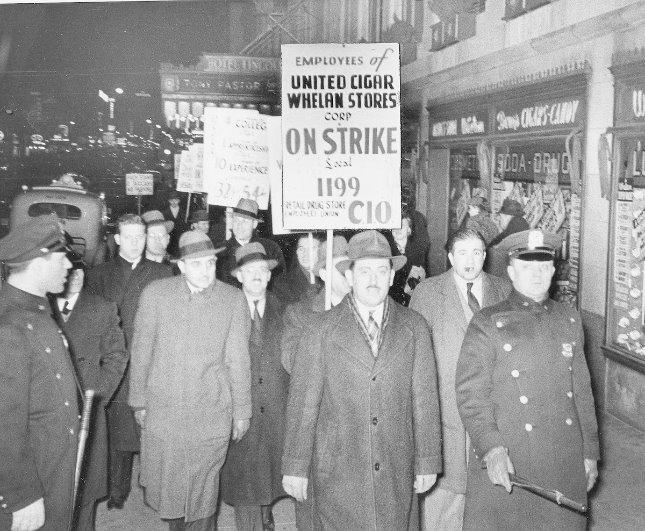
Local 1199 was founded in 1932 by Leon Davis and a small group of New York City pharmacy workers, predominantly Jewish émigrés from Eastern Europe, who became pioneers in the struggle for living wages and against racial segregation. Early 1199ers led groundbreaking organizing efforts among the largely Black workforce of the city’s pharmacies’ sodamen, and began organizing porters, clerks, cosmeticians and other workers excluded from other established unions of the time.
1950s
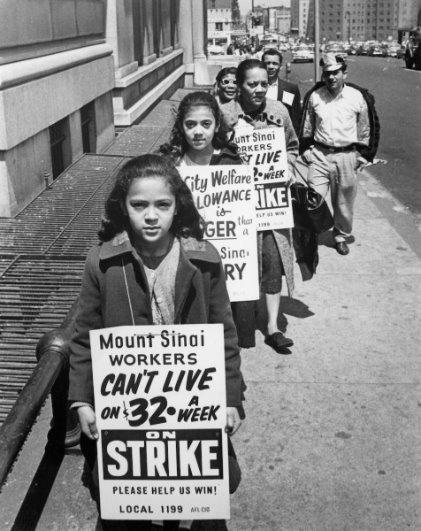
In the 1950s, during the first flush of the Civil Rights Movement, 1199 launched large-scale organizing drives at New York City’s Voluntary Hospitals, mobilizing a workforce that was majority Black and Latina. These workers were paid as little as $32 a week for a 48-hour week and trapped in poverty. With an unprecedented 46-day strike in seven of the city’s most prestigious hospitals—including Montefiore, Mt. Sinai and Maimonides hospitals— members won 1199 recognition.
1960s
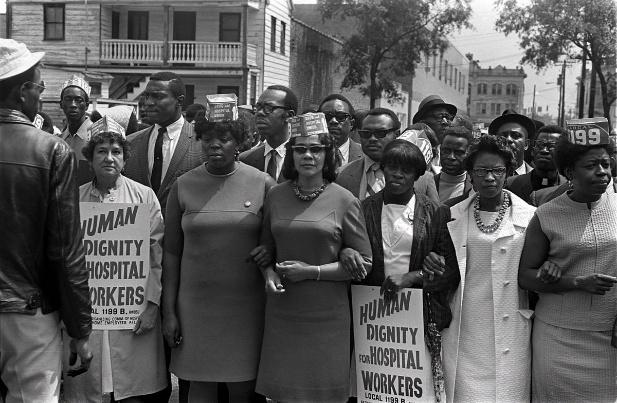
A historic 1965 organizing campaign at Lawrence Hospital in Bronxville, NY won hospital workers across the state collective bargaining rights for the very first time. More gains came in the following years, including a 1968 victory that established the $100 per week minimum wage and 1199’s Benefits, Pension and Training Fund. In 1969, a three-month strike by 400 Black women workers at two Charleston, SC hospitals paved the way for 1199’s national expansion. Under the slogan “Union Power, Soul Power” 1199 formed a national organizing committee with Coretta Scott King as the honorary chair. Though their own organizing campaign was unsuccessful, the Charleston workers secured wage increases and a grievance procedure — and spurred the creation of new 1199 districts in Upstate New York, Pennsylvania, Connecticut, Rhode Island, West Virginia, Kentucky, Ohio, Washington state, New Mexico and elsewhere.
1970s and 80s
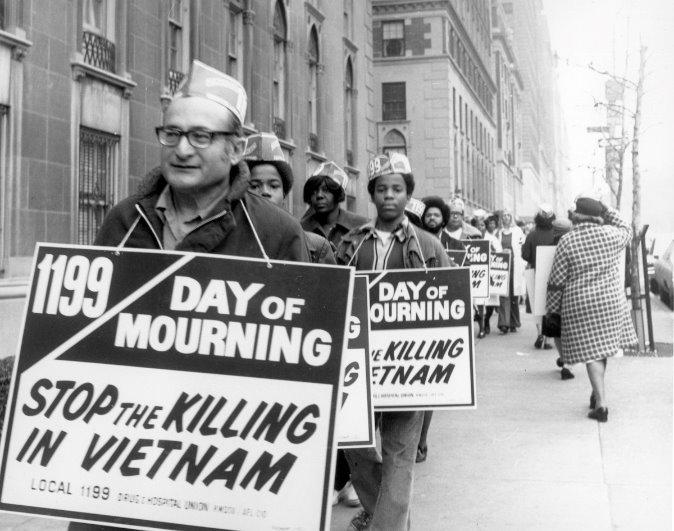
1199 continued to establish itself as a national force and moral presence—protesting the war in Vietnam and mobilizing in support of the anti-apartheid struggle in South Africa.
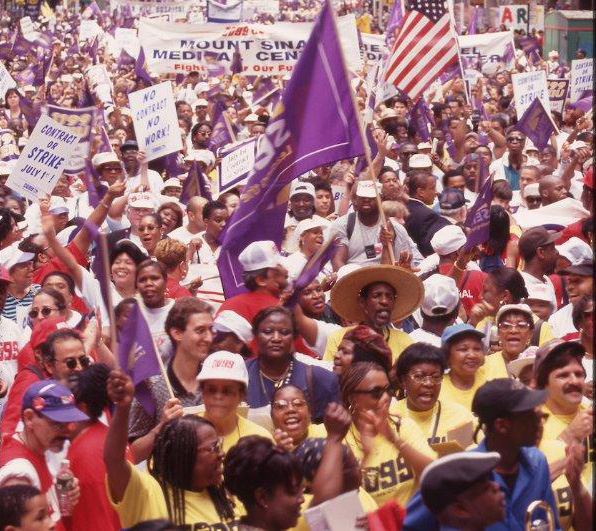
A tumultuous period of internal strife within the union during the mid-1980s culminated in the rank-and-file Save Our Union movement. Dennis Rivera, a leader in Save Our Union, was elected president of 1199 in 1989. That year, contract negotiations with the industry-wide League of Voluntary Hospitals broke down in New York City. Forty-six thousand 1199 members went on strike in a city-wide action and won an historic settlement—setting the stage for massive gains in the years ahead.
1990s
The 1990s was a time of renewal and unity at 1199, which began to grow rapidly through organizing thousands of nursing home and homecare workers across downstate NY.
In 1998, 1199 affiliated with SEIU to become 1199SEIU United Healthcare Workers East. Over the next decade, some twenty other, smaller SEIU healthcare locals merged with 1199SEIU, which grew into Upstate New York, Massachusetts, New Jersey, Maryland, Washington, D.C. and Florida.
2000s
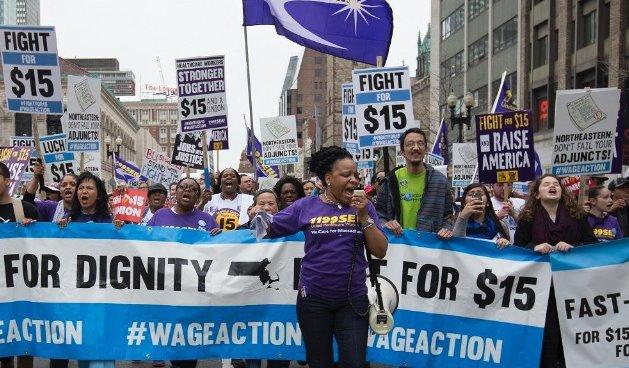
Surging growth and political power characterized 1199SEIU, which established itself as the largest union local in the nation. Beyond setting the highest standards of wages and benefits in the healthcare sector, 1199ers were instrumental in securing transformative legislation, including passage of the Affordable Care Act which brought health insurance to over 50 million Americans, establishing a $15 minimum wage across several states as part of the “Fight for $15,” and winning safe staffing legislation in hospitals and nursing homes, among other patient protections.
Today
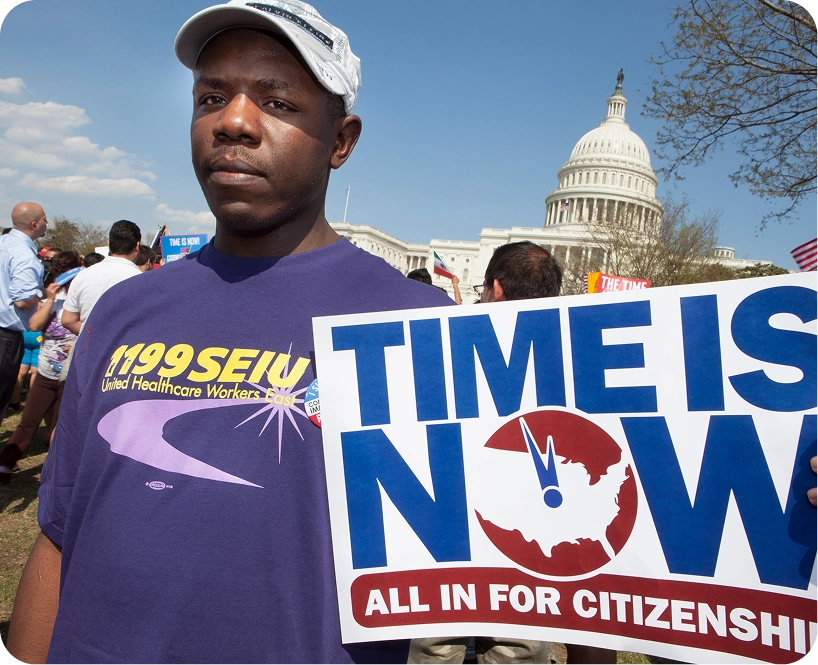
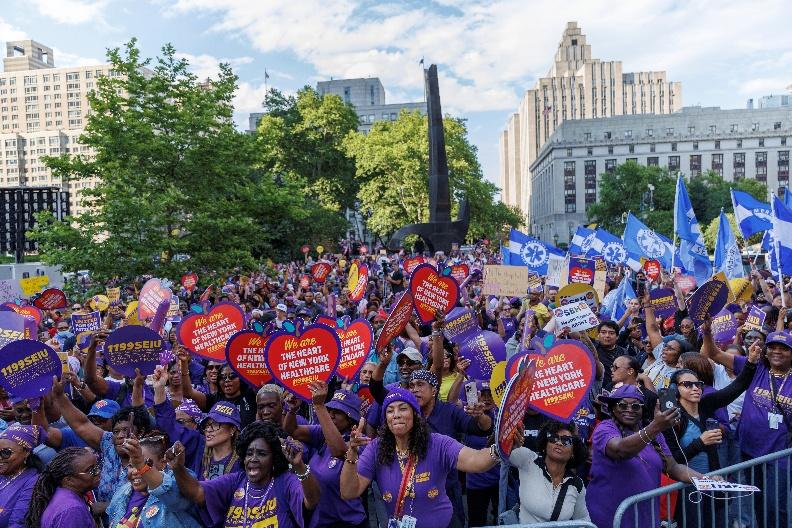
In 2025, members overwhelmingly elected President Yvonne Armstrong and her leadership team, ushering in the latest chapter of 1199SEIU built on member-driven action and unity. While continuing to win the strongest standards for healthcare workers in the country, in 2026 the union launched the largest organizing drive in the history of the US labor movement while serving as a national force in the fights to protect Medicaid, to guarantee workers’ rights, and to defend immigrant families and communities.
Built on nearly a century of struggle and solidarity, 1199SEIU members continue to grow worker power in pursuit of a future where every family can thrive.