



Delegate Profile: Peyton Humphreville
February 11, 2026
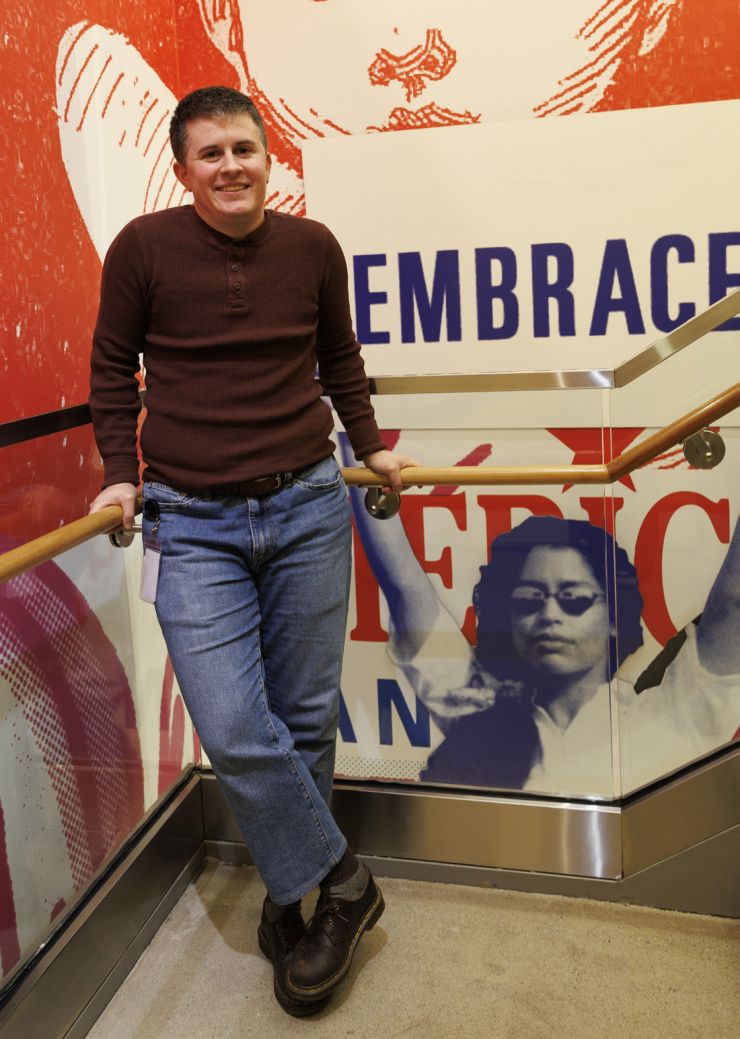
Union work and organizing has been an important part of Peyton Humphreville’s journey — even if they didn’t grow up in a union household.
“I actually grew up in a really anti-union household, my dad is very anti-union,” says Humphreville. It was not until their undergraduate years at Harvard University that they began to understand the power of organizing.
“There was this big organizing effort among students to support on-campus workers. These were the financial crash years, so there were many worker layoffs. But, the unions were strong, so it was really cool to see what was happening. I wasn’t directly involved in that organizing, but it was great to see the ways students could show solidarity and fight back against a wealthy and powerful university that was not treating them well,” Humphreville explains.
As an 1199 Senior Staff Attorney for Planned Parenthood Federation of America (PPFA) in Manhattan, Humphreville represents Planned Parenthood health centers and advocates for patient access to health care.
“When people think of Planned Parenthood, they usually think of the clinics, which are regional and run by affiliates — or they think about the people who use important services, like getting an annual physical exam. In the national office, we do everything from technical web support to fundraising. My department is like a law firm within PPFA that represents affiliate health centers. We also represent PPFA when states pass restrictive abortion laws, going to court to advocate for patient access. We also do a lot of Medicaid-related work because Planned Parenthood is frequently targeted for exclusion.”
That exclusion, along with broader Medicaid cuts, is something Humphreville watches closely.
“The cuts to Medicaid are scary because just over half of Planned Parenthood patients nationwide rely on Medicaid. If those cuts go through, it will hugely affect our patient population. There’s also a provision in the ‘Big Ugly Bill’ that restricts nonprofit abortion providers from receiving Medicaid reimbursements. It doesn’t name Planned Parenthood specifically, but it clearly targets organizations like ours.”
Despite their passion for advocacy, Humphreville did not initially envision becoming a lawyer.
“I would say I’ve always had strong opinions,” Humphreville laughs. “But I definitely did not think I was going to be a lawyer. After graduating college, I didn’t know what I was doing. A friend became a paralegal and it felt like something practical. I thought — okay, that’s a job title I can search for.”
Humphreville went on to law school, graduating in 2016, and later joined PPFA in 2022 after working in nonprofit and public interest roles.
“At one of my previous jobs, there was a failed unionization attempt. Management was hostile, but it still deepened my interest in labor and unions. When I started at PPFA, the first contract negotiations were happening. The bargaining committee members were fierce advocates, and I wanted to be involved.”
Following layoffs and chapter restructuring, Humphreville stepped up as an 1199 Delegate.
“Before becoming a delegate, I didn’t understand grievance processes or how contracts really functioned beyond legal language. Now, I’m thinking through substantive and economic terms, translating worker concerns into proposals, and collaborating across departments. It’s about figuring out what we can change to make the workplace better.”
They are currently serving on the bargaining committee for the second union contract.
“We had our first session in November. The main issues are wages and health insurance. It’s been energizing to see members engaged and ready.”
Humphreville also pointed to early successes.
“One fellow delegate won a grievance related to telecommuter status. Management attempted to reverse an approved remote arrangement, but we were able to protect the member’s job through the contract.”
When asked what they would say to others considering union leadership, Humphreville emphasized both personal and collective benefits:
“In addition to helping other workers, you learn how to advocate for yourself, understand your contract, and recognize when something isn’t right. A union agreement won’t solve every workplace problem, but it provides tools you can use creatively. Bargaining is both maddening and fun — and I’m learning a lot.”